Union Point’s seven linked statewide service categories have different purposes. A correct scope starts with tank integrity and heat production, while municipal treatment or a private well may require a different specialist.
 01
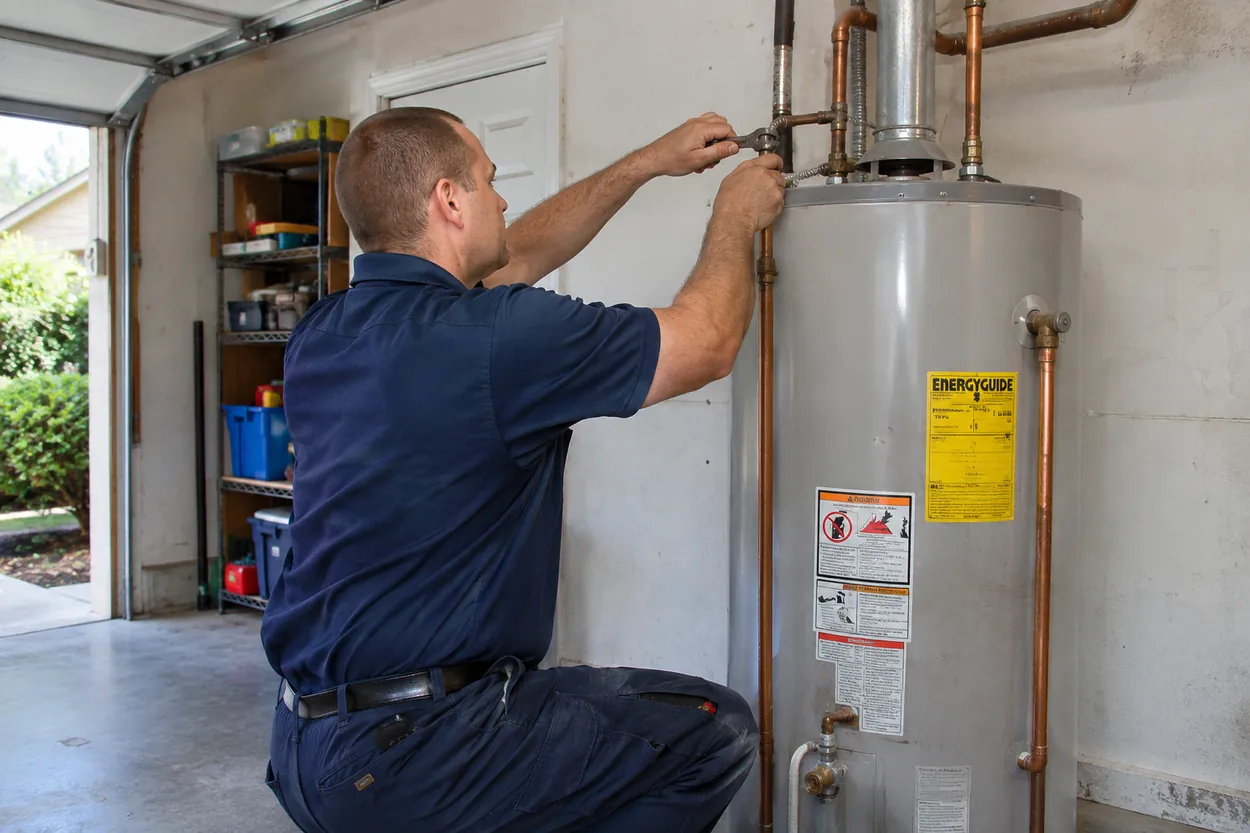
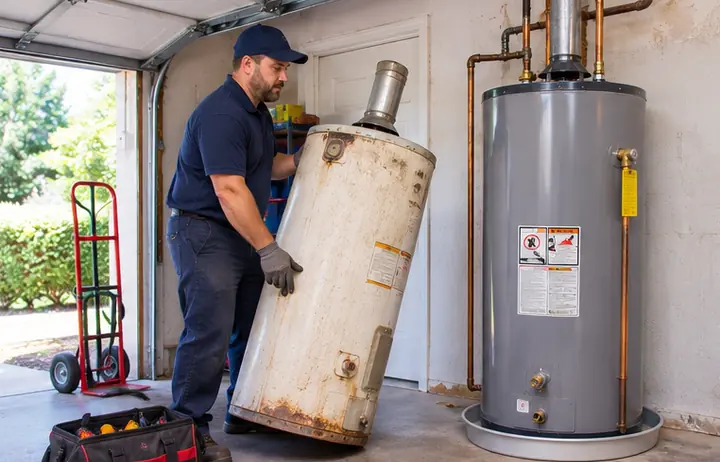
Replacement can be appropriate after confirmed inner-vessel leakage or severe nonrepairable corrosion. Sediment in a city main or an unrelated well-pressure failure will remain after a perfectly new tank is installed.
Learn About This Service →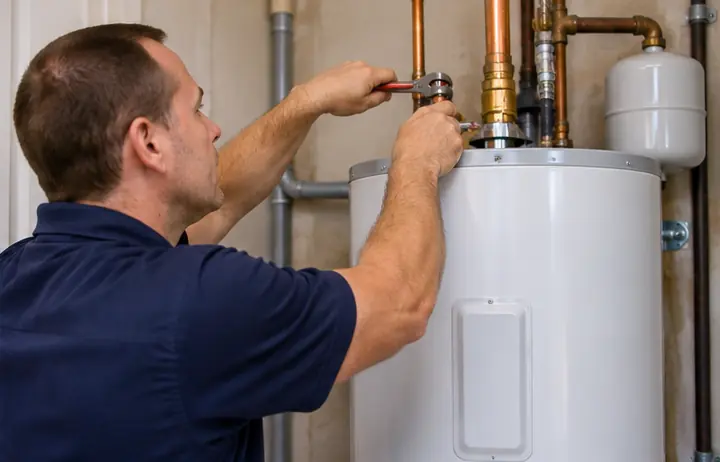 02
Installing a new unit requires checking fixture demand, installation clearances, permitted supply connections, drain-pan design and any local inspection requirements. Use the actual Greene County address, not just a city label, to determine what applies.
Learn About This Service →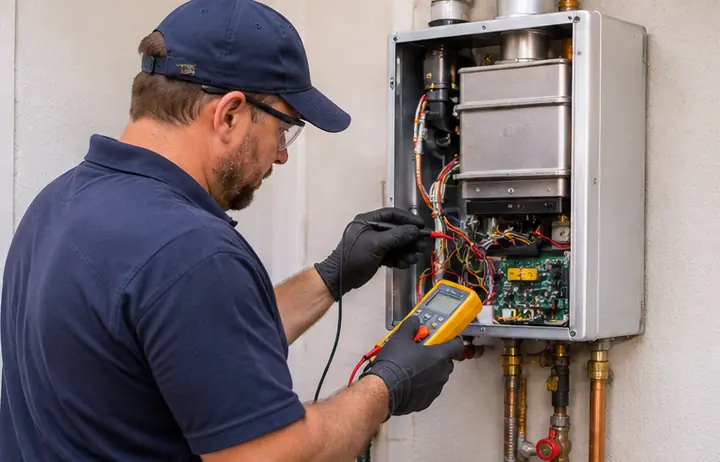 03
Tankless repairs should account for inlet water flow, temperature sensors, filters, exhaust and model-specific trouble codes. Private well fluctuations and blocked fixture screens can look like an electronic heater defect.
Learn About This Service →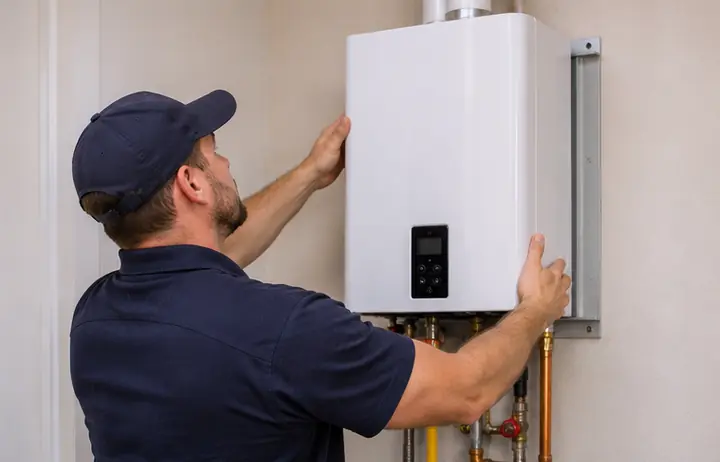 04
A conversion to on-demand heating needs a load calculation for simultaneous taps, available gas or electric capacity, and the condition of the property’s water delivery. The wall-mounted format does not eliminate venting or treatment concerns.
Learn About This Service →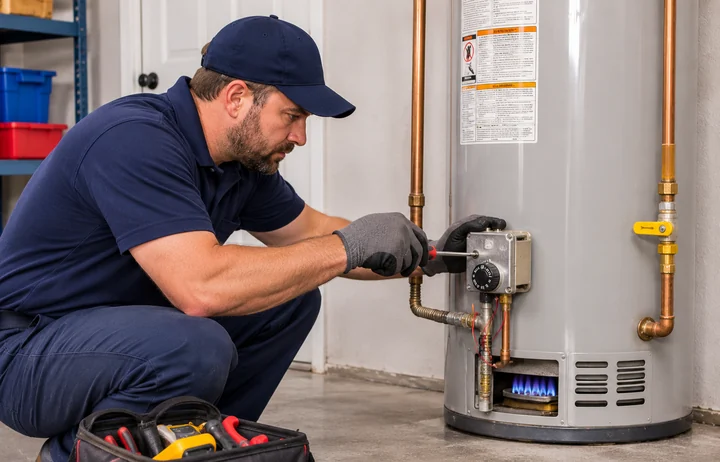 05
Gas appliance work must examine ignition controls, flame safety, exhaust and combustion air. A fuel odor or suspected carbon monoxide condition must be handled as an emergency rather than an ordinary comfort complaint.
Learn About This Service →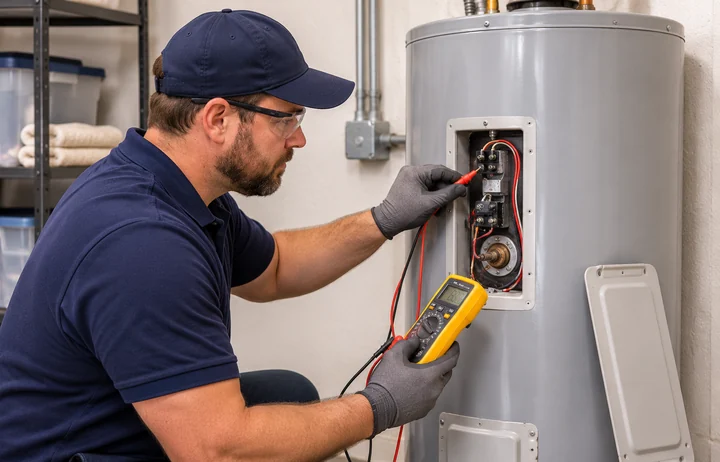 06
Electric repairs may include replacing an identified element, temperature control or safety switch. Test after safe isolation, verify the tank is full before energizing and avoid guessing whether discoloration proves electrical failure.
Learn About This Service →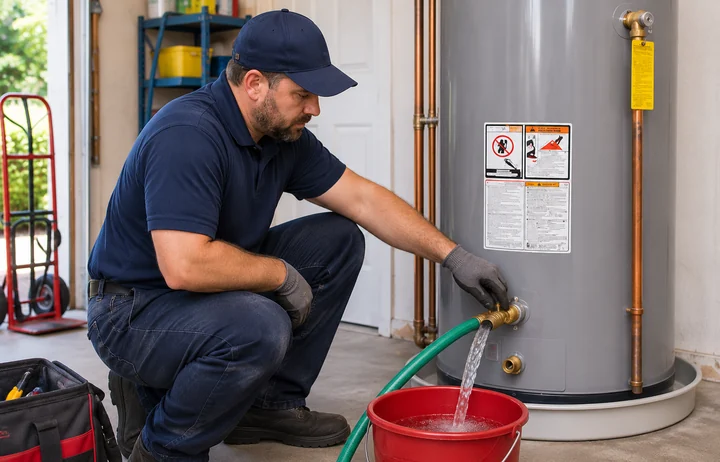 07
Maintenance may include reviewing scale, sediment, anode condition and manufacturer recommendations. A planned maintenance task should not be sold as a cure for unsafe relief discharge or a cracked inner tank.
Learn About This Service →