 01
Water Heater Replacement
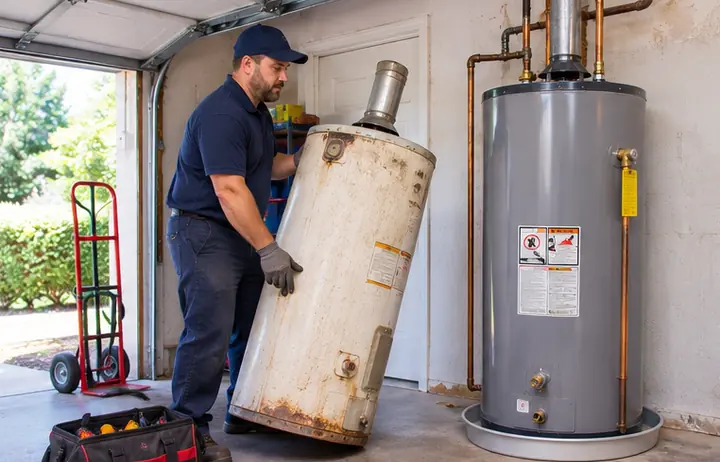
When an aging, severely corroded, or leaking heater is no longer a sensible repair candidate, replacement planning should consider tank capacity, fuel type, connections, and hot-water demand.
Learn About This Service →
Water Heater Repair Pros provides water heater maintenance and flushing across Georgia. We service tank and tankless systems for homes and businesses with practical maintenance recommendations.
Our technicians are licensed and insured. Service availability, findings, repair scope and charges are confirmed by our team.
Water heater maintenance helps property owners understand the condition of their equipment and address sediment, scale, visible deterioration and service needs before choosing the next step. Storage tanks and on-demand heaters require different care, and a flush is only one possible part of a maintenance visit.
Water heater maintenance in Georgia can involve tank sediment management, checking visible plumbing connections, assessing safety devices and evaluating controls. For compatible tankless models, descaling and inlet-filter cleaning may also be relevant. The actual tasks depend on the heater's manufacturer guidance, age, condition and service history. A routine service request is not the same as an emergency repair or a promise that every existing fault will be corrected by flushing.
Water Heater Repair Pros provides local water heater service in Georgia. Our team confirms service coverage, equipment capabilities and the proposed maintenance work directly with you. If you already have no hot water, repeated breaker trips, suspected gas concerns or a tank that is actively leaking, start with a professional evaluation rather than assuming maintenance alone will solve the problem. Learn about water heater repair in Georgia or call with your heater model, symptoms and ZIP code.
Routine service is an opportunity to identify conditions that affect operation and decide whether cleaning, adjustment, component attention or replacement should be considered. The benefit of any particular maintenance task depends on the heater's existing condition. It should not be presented as a substitute for proper diagnosis.
Water can leave sediment in a storage tank as minerals settle during repeated heating. A professional can assess whether tank flushing is appropriate and whether deposits may be contributing to noise or operating complaints.
Connections, the drain area, exterior corrosion and evidence of moisture can reveal conditions that deserve attention. Early observations may help clarify whether the situation is routine maintenance or an active repair issue.
An assessment can help distinguish normal hot-water demand from slow recovery, temperature problems or equipment faults. Flushing will not fix a failed thermostat, heating element, burner or control.
The professional can explain observed wear, suitable maintenance and possible next steps, including when repair or replacement deserves evaluation. No maintenance procedure can restore a tank with structural corrosion or a leak through its shell.
Preventive maintenance decisions should follow actual observations and manufacturer instructions, not a universal claim that every water heater needs the same service at the same interval. Even when a unit is still producing hot water, changes in sound, temperature, leakage or recovery are worth describing when you call.
The following symptoms can justify a maintenance discussion or a more detailed professional diagnosis. None is conclusive proof that flushing alone is needed. Share when the issue started, whether it affects one fixture or the entire property, and any recent changes to the equipment.
Repeated popping or rumbling from a tank may occur where water heats around mineral deposits. Controls, operating conditions and other causes also deserve consideration; a noise does not automatically identify the problem.
A shorter-than-usual supply may involve demand, tank capacity, heating performance or a component fault. Maintenance and repair are different options and should be distinguished through evaluation.
Unexpectedly hot or lukewarm water can involve controls, demand, mixing issues or the heater itself. Scalding temperature is a safety concern and should not be treated as a routine flush request.
Discoloration may result from the water supply, corrosion in piping or conditions associated with an aging storage tank. A professional should determine whether hot water alone is affected and whether tank damage is suspected.
Moisture around a fitting differs from a leaking storage-tank shell. Active leaks, rusting metal and water near electrical components can require prompt repair or replacement assessment rather than ordinary maintenance.
Certain tankless systems may show reduced performance from deposits or inlet-filter restrictions. The correct next step depends on the specific model, diagnostic information and water quality.
If a heater is leaking heavily, creating an electrical hazard, or there is a suspected gas leak, do not treat the situation as a routine maintenance appointment. Use appropriate safety precautions and contact qualified or emergency services as needed.
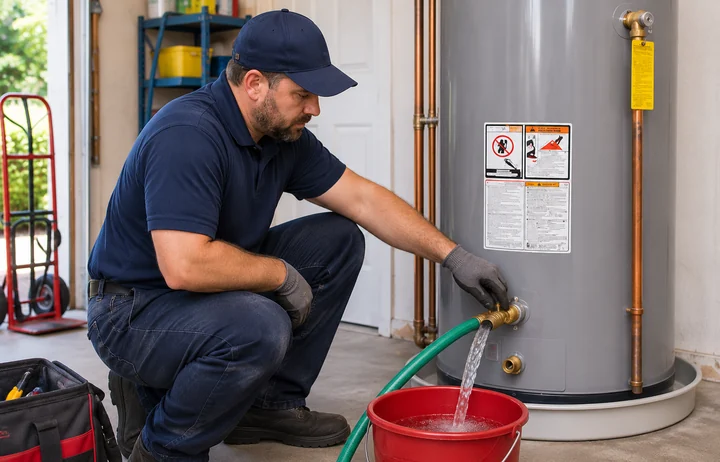
Call About Heater ServiceWater heater flushing generally means removing water and loose accumulated material from a storage tank through its drain arrangement when the equipment is suitable for that work. Minerals naturally present in water can settle in the tank, particularly where temperature and water chemistry encourage deposits. Some material may remain even after a flush; the procedure does not reverse tank corrosion or remove every hardened deposit.
A qualified professional first considers the model, manufacturer instructions, drain condition, tank age, visible corrosion and available drainage. The service may involve safe isolation, draining or flushing as appropriate, checking for normal operation afterward and identifying signs that further work is needed. Hot water, pressurized discharge, electricity and fuel connections make this a job where proper equipment handling matters.
The service decision depends on tank construction, condition and history. Severely corroded or actively leaking equipment may need a different recommendation.
When suitable, a professional can use the manufacturer-appropriate drain and flushing process to remove loosened deposits and evaluate whether the drain and connections remain sound.
After the appropriate procedure, the professional checks for drainage or connection problems and explains any remaining noise, heating symptoms or repair concerns. Flushing is not a cure for all hot-water complaints.
Never assume that repeated draining or forcing a stuck drain valve will be harmless on an older heater. Tell our team if the tank has never been flushed or if you have seen corrosion around its bottom, fittings or relief discharge.
The exact scope of a water heater maintenance service varies by heater type and condition. The items below are possible assessment or servicing topics, not a promise that every procedure is part of each maintenance visit. Ask which checks and tasks are included before authorizing work.
Check the exterior for corrosion or moisture, review accessible water connections and note the condition of the drain area. Visible moisture around a fitting is different from a leak through the tank body.
Many conventional steel storage tanks have sacrificial anode rods that help reduce corrosion of the tank lining. The need for inspection or replacement depends on model design, water chemistry, usage and manufacturer guidance.
A temperature-and-pressure relief valve is a critical safety device on applicable storage tanks. Its condition, discharge routing and appropriate inspection should be assessed in accordance with equipment instructions, since hot discharge water can cause severe burns.
The professional may review reported recovery or temperature problems, and determine whether a control, element, burner or another component requires separate repair. Observed issues are not automatically solved by tank flushing.
Inspection can identify water staining, rust around connections or concerns near the tank base. A tank shell leak or extensive corrosion may make replacement safer or more practical than continuing maintenance.
If the storage tank is suitable, sediment management may be included. The process and follow-up depend on the drain design, manufacturer directions and the tank condition.
Gas, electric and tankless water heaters do not have identical parts or maintenance procedures. Service-specific checks must be matched to the unit, and additional repairs or replacements should be explained as separate work.
Tankless water heater maintenance is different from draining a conventional tank. Depending on the model and local water quality, a professional may inspect the inlet screen, evaluate mineral accumulation and perform manufacturer-approved heat-exchanger descaling or flushing. Some systems include isolation valves and water heater services for this purpose; others have different arrangements.
Mineral scale can affect water flow and heat transfer in some tankless systems. A service professional identifies whether cleaning is indicated and follows the model-specific procedure.
Some tankless heaters use inlet screens to catch debris. Restricted flow can interfere with operation, but it may also have other causes that require diagnosis.
Suitable cleaning agents, connections, circulation process and rinsing steps differ by manufacturer. Incorrect chemical use or improper servicing may damage the equipment.
A professional may check for remaining diagnostic codes, heating problems, leaks, venting concerns or related defects following appropriate maintenance. Descaling is not a substitute for repairs to failed components.
Some manufacturer instructions recommend professional periodic filter cleaning and flushing based on water quality. If your unit has an error code, share the exact model and code rather than attempting repeated resets. For an active malfunction, see tankless water heater repair in Georgia.
Storage tanks that use gas and those that use electricity can share issues such as tank sediment, connection leaks, corrosion and temperature problems. However, combustion components and electrical heating controls require different professional checks.
Gas units may require evaluation of burner operation, gas controls, pilot or electronic ignition components, and signs of unsafe combustion. Service around the fuel system must be handled by qualified personnel.
Gas-fired equipment needs the venting and air supply required by its design. Blocked or damaged venting, gas odors or suspected carbon monoxide exposure require immediate safety attention rather than routine flushing.
Electric storage models may involve heating elements, thermostats and protective controls. An electrical malfunction, breaker trip or overheated connection requires a safe professional assessment, not tank flushing alone.
For applicable gas and electric tanks, visible leaks, pressure-relief equipment, drainage, water connections and corrosion are relevant maintenance considerations. Not every model uses the same components.
For a diagnosed fault rather than preventative maintenance, consult our statewide gas water heater repair or electric water heater repair pages. Our team can explain when the work is maintenance, diagnosis or repair.
There is no single appropriate flushing interval for every model, household or water supply. Equipment manufacturers give model-specific inspection and cleaning recommendations, and the actual need for service can vary with mineral levels, usage, system design and previous maintenance. Annual servicing may appear in manufacturer checklists for some equipment, but it should not be treated as an automatic rule for every heater in Georgia.
The correct maintenance tasks and their frequency may vary substantially by heater model. Consult the documentation for that equipment rather than following a generic schedule as if it applies everywhere.
Mineral-rich water and heavy usage can change sediment or scale accumulation. A professional can consider these conditions alongside the service history and actual symptoms.
Knowing whether the tank has been maintained, whether a relief valve has ever discharged and whether scale-related errors have appeared helps guide a sensible inspection plan.
Ask our service team which procedures they recommend for your exact water heater, what they observed and when another review may be appropriate. Do not assume that a unit needing urgent repair can safely wait for a routine maintenance interval.
An older storage water heater that has not been drained or inspected for years deserves an assessment before a flush is attempted. The concern is not that flushing always damages old tanks; rather, existing corrosion, fragile fittings or a failing drain may make maintenance less appropriate than evaluating replacement.
Rust around the tank base, persistent dampness or leakage through the tank shell can signal deterioration that cleaning cannot reverse. Severe damage may require replacing the water heater.
A seized, deteriorated or leaking drain valve may create additional work and water-release risks if operated. A professional should determine whether a safe procedure is possible.
Our team can explain whether limited maintenance is reasonable, whether a separate repair is needed or whether the condition of the tank makes replacement the practical option.
If the tank is leaking through its shell, repeatedly losing hot water because of diagnosed major faults, or shows severe corrosion, review our water heater replacement in Georgia guidance. Do not rely on descaling or flushing to restore structurally damaged equipment.
Water heater maintenance costs in Georgia depend on the equipment and agreed scope. A phone description can help identify the type of service requested, but it cannot establish a reliable flat price without our team understanding the model, condition and access.
Conventional tank flushing and tankless heat-exchanger descaling involve different equipment and procedures, and their scopes should not be assumed to cost the same.
A simple visual inspection differs from an assessment involving relief-valve checks, anode evaluation, filter service, water testing or other model-appropriate tasks.
A heater in a tight closet, elevated area or difficult mechanical room may require additional setup or labor compared with an accessible utility space.
A deteriorated drain, damaged connection or corroded tank may require a change in plan or separate repair/replacement recommendation.
Replacement parts, control failures and other defects are not automatically included in routine maintenance. Ask what is proposed and authorize any additional work separately.
Before agreeing to service, ask our team what the quoted scope includes, how pricing will be communicated and whether a separate repair or replacement is being recommended. Water Heater Repair Pros does not publish unverified statewide flat maintenance rates.
Water Heater Repair Pros provides water heater maintenance and flushing services for Georgia homes and businesses. Whether your storage-tank heater needs sediment flushing or your tankless unit needs descaling, our team can review your equipment and concerns, then confirm which services and scheduling options are available for your location.
Call (833) 423-3192 with your city or ZIP code, heater model, whether the request involves a storage-tank flush or tankless descaling, and any observed symptoms. Our team can explain the assessment, service options, scheduling and next steps.
Do not see your city? Browse the complete Georgia Service Areas directory or call with your street address to discuss local service availability.
Need help with water heater maintenance? Describe your water heater type, symptoms and location so our team can discuss the appropriate service.
Call About Water Heater MaintenanceThe appropriate interval depends on the water heater model, manufacturer guidance, water quality, usage and service history. Some manufacturer maintenance schedules discuss annual service, but that should not be applied universally. A professional can explain whether flushing is appropriate for the specific heater and when to review it again.
Minerals naturally present in water can settle out as water is repeatedly heated. Deposits may collect at the bottom of a storage tank. The amount and effect of buildup depend on water chemistry, temperature, usage and tank design; visible symptoms should still be professionally evaluated.
Sometimes. Rumbling or popping can be associated with sediment accumulation, and flushing a suitable tank may reduce loose deposits. However, noises can have different causes, and flushing will not repair a failed heating element, control, burner or corroded tank. A professional should determine the cause.
Some do, particularly where water quality and the manufacturer’s instructions call for periodic heat-exchanger flushing. The process, approved cleaning method and service interval are model-specific. Inlet-filter cleaning may also be relevant, and a qualified professional should handle the procedure.
Many steel storage water heaters use a sacrificial anode rod to help protect the tank from corrosion. The rod gradually wears as part of that protection. Whether and when it should be inspected or replaced depends on the equipment design, the rod type, water conditions and manufacturer instructions.
Not automatically. A very old or neglected tank may have corrosion, a fragile drain valve or active leakage that makes flushing a poor choice. A professional should review the actual equipment first, then discuss whether maintenance, repair or replacement is reasonable.
Compare related water-heater services or return to the Georgia water heater repair homepage for information about an existing hot-water problem.
01When an aging, severely corroded, or leaking heater is no longer a sensible repair candidate, replacement planning should consider tank capacity, fuel type, connections, and hot-water demand.
Learn About This Service → 02
Installation for a new property, a renovated space, or a different equipment setup requires appropriate sizing, location planning, and checks of the available plumbing and utilities.
Learn About This Service →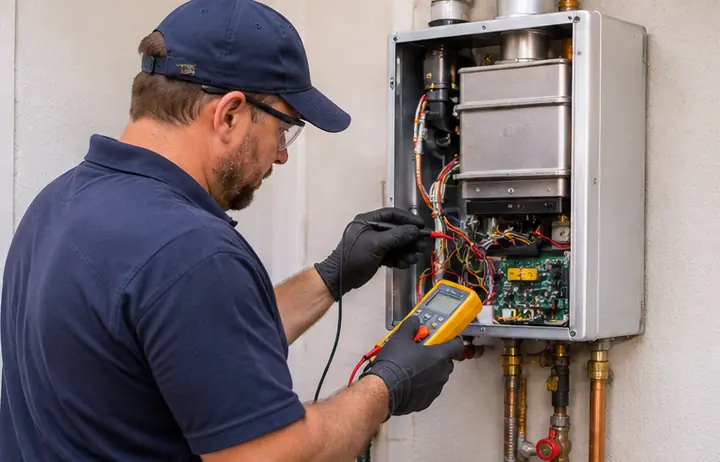 03
On-demand water heater problems may involve flow sensors, mineral buildup, error codes, ignition, controls, or other model-specific faults that need careful diagnosis.
Learn About This Service →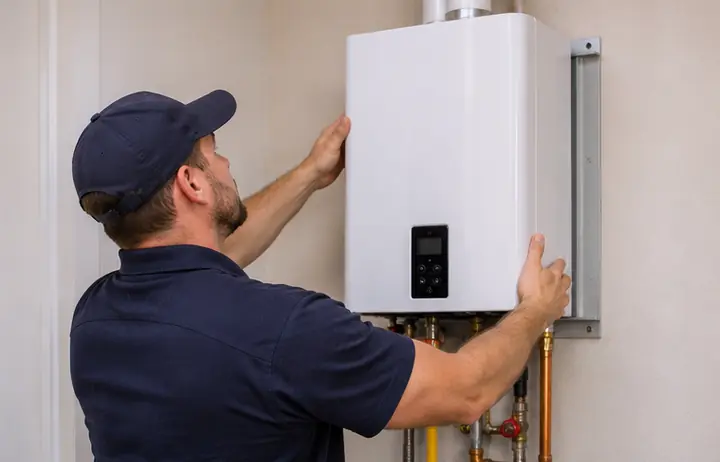 04
Tankless equipment selection depends on the hot-water flow needed at the property, required temperature rise, and whether existing gas, electrical, and venting systems are suitable.
Learn About This Service →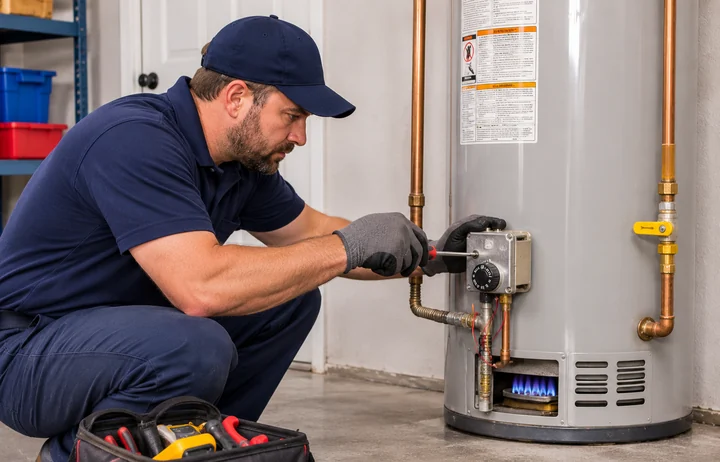 05
For gas-fired equipment, a professional can evaluate symptoms involving poor heating, ignition controls, burners, and safe venting before recommending appropriate work.
Learn About This Service →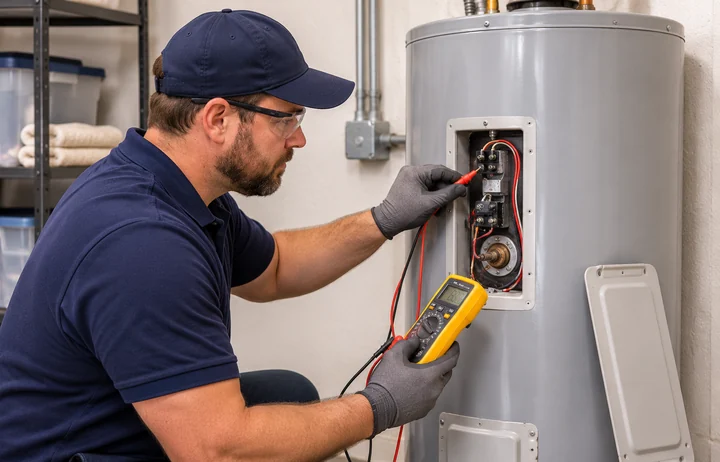 06
Electric water heater service may involve heating elements, thermostats, power-supply conditions, or temperature-control problems. Electrical testing and repairs belong with qualified professionals.
Learn About This Service →Call to describe your water heater maintenance or flushing needs and discuss service availability with our team.