 01
Water Heater Replacement
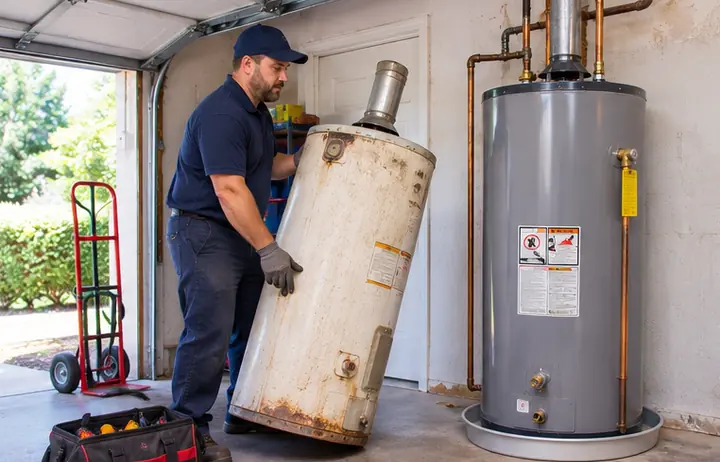
When an aging, severely corroded, or leaking heater is no longer a sensible repair candidate, replacement planning should consider tank capacity, fuel type, connections, and hot-water demand.
Learn About This Service →
Water Heater Repair Pros repairs electric water heaters across Georgia. Our team diagnoses heating elements, thermostats and controls with careful inspections and clear recommendations for homes and businesses.
Our technicians are licensed and insured. Service availability, findings, repair scope and charges are confirmed by our team.
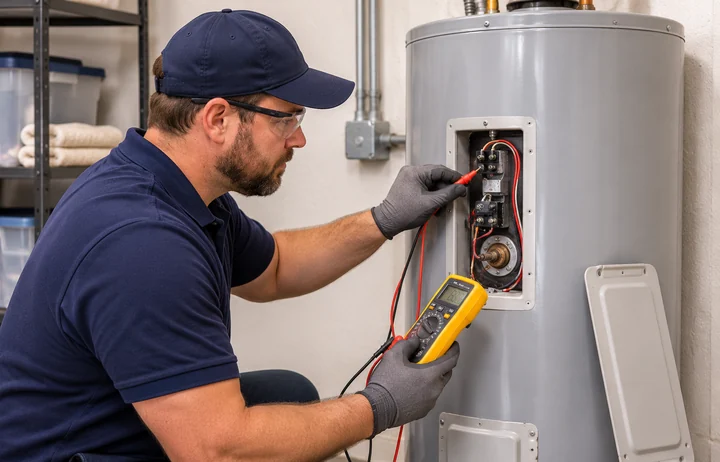
An electric storage water heater can stop heating, recover slowly or deliver only a short supply of hot water for several different reasons. Heating elements, thermostats, safety limits, wiring and the tank itself must be considered before deciding what work is appropriate.
Electric water heater repair in Georgia starts with identifying what the heater is doing and whether the problem concerns the unit, its electrical supply or another part of the hot-water system. On conventional electric tank models, failed heating elements and temperature controls are possible causes of cold or lukewarm water, but neither should be assumed without professional diagnosis. Repeated breaker trips and damaged wiring raise safety concerns that must be evaluated before continued use.
Our team works directly with Georgia homeowners and businesses on water heater service, discussing equipment issues, scope, pricing and scheduling clearly.water heater installation in Georgia.
When you call, describe whether the problem affects every hot-water fixture, whether the heater is making unusual sounds, and whether a breaker has tripped. The observations below are useful for discussion; they are not instructions to open an electrical compartment or test live wiring.
A cold tank can reflect loss of power, a failed heating element, a faulty temperature control or a safety limit interruption. A technician needs to determine which component or supply condition is responsible.
An unusually short supply may be linked to one nonworking element in a two-element tank, heavy demand, mixing issues or capacity that no longer suits the property. The symptom alone does not prove a single part has failed.
Inconsistent or unsafe water temperature can be associated with thermostats, controls, sensor problems or other conditions. Scalding water requires prompt professional attention.
A breaker that trips repeatedly may indicate an electrical fault, a damaged heating element, wiring trouble or another load issue. Do not repeatedly reset it or bypass protection.
Moisture can come from fittings, the temperature-and-pressure relief discharge, a drain connection or a failing tank. Water near an electrical access panel is a safety concern.
Popping or rumbling may develop as sediment accumulates in a tank. Slow recovery can have several explanations, including controls, elements, demand or tank condition.
If you see sparking, smoke, water entering electrical components or a repeatedly tripping breaker, stop using the heater and seek qualified help. If there is immediate danger, contact emergency services.
Call About Electric Water Heater ServiceElectric storage heaters have model-specific wiring and controls. Many conventional units have upper and lower heating elements and thermostats, while other equipment may use a different arrangement. A qualified professional should evaluate the actual model instead of replacing parts by guesswork.
A heating element transfers energy into the stored water. A failed upper or lower element may prevent adequate heating or reduce available hot-water volume. Diagnosis should also consider the controls and electrical supply.
Thermostats regulate when heating elements operate. A failed or incorrectly responding control may cause insufficient heating, poor recovery or temperature problems, but testing is needed before deciding on replacement.
The high-temperature cutoff is intended to interrupt heating in an abnormal condition. A tripped limit may point to an underlying fault; simply resetting it repeatedly can leave a dangerous problem unresolved.
An interrupted circuit, damaged disconnect, unsuitable voltage or breaker problem can leave a heater without usable power. A qualified person should assess electrical supply conditions safely.
Loose, damaged or overheated connections can interfere with operation and present a fire or shock hazard. Work around terminals or wiring must be handled by qualified personnel.
Sediment and internal corrosion can affect performance or create other service needs. A severely deteriorated or leaking tank may be a replacement issue rather than a heating-element repair.
Electric water heater failures sometimes overlap with problems in household plumbing or hot-water distribution. When a unit is sound but water is still insufficient, the professional should consider the full system before proposing unnecessary electrical component work.
For a typical service request, a technician first confirms the equipment type, model and reported symptom. Appropriate electrical isolation and safe testing procedures come before inspecting the heating system. The objective is to distinguish a failed part from a supply problem, tank damage or a condition that makes the heater unsafe to operate.
Share the tank model, approximate age if known, whether water is completely cold or only runs out early, and whether the issue began suddenly or gradually. Keep breakers and access panels untouched if there are signs of electrical trouble.
A qualified professional checks the electrical supply and relevant protective components using procedures appropriate for the equipment. Repeated tripping should be investigated rather than treated as a routine reset.
The professional may test heating elements, thermostats and safety limits once the system is made safe. Tests and compatible replacement parts depend on the unit and manufacturer guidance.
Our team can explain whether a component repair, another type of work or replacement is appropriate, together with the proposed scope and charges before work proceeds.
A useful call includes the model information, hot-water symptoms, ZIP code and whether the breaker has tripped. Do not attempt live electrical testing yourself.
Discuss Electric Heater SymptomsConventional electric storage heaters often depend on heating elements and thermostats working together. In a common two-element configuration, a problem with one element can change recovery behavior or the amount of usable hot water, while failure elsewhere in the control system may create similar symptoms.
Heating-element problems: A failed element may leave the tank completely cold or cause incomplete heating, depending on the system design. The replacement element must match the heater’s electrical and mechanical specifications, and a professional should confirm the root cause before replacing it.
Thermostat problems: Controls may fail to energize a working element or may not regulate temperature correctly. The correct diagnosis takes into account upper and lower controls, the safety cutoff, the actual measured conditions and the manufacturer’s wiring scheme.
Some newer electric systems, including heat-pump water heaters, use additional sensors and electronics. Their diagnostics differ from standard resistance-tank models. Callers should identify the equipment type so our team can confirm whether it is within their service capabilities.
Electric water heaters combine high-voltage equipment with stored water, which makes repeated breaker faults, visible damage and leakage near electrical components particularly important. A breaker is a safety device; it should not be repeatedly reset to keep a malfunctioning water heater running.
A breaker may trip for several reasons, including equipment faults or wiring problems. Turn to a qualified professional for diagnosis instead of replacing the breaker with a higher-rated one or bypassing protection.
Water entering an electrical compartment, burning smells, sparks or smoke are warning signs. Keep clear of affected equipment; shut off power only if doing so is safe and accessible without approaching a hazard.
Excessively hot water may cause serious burns and can indicate a control failure. Do not override temperature limits or leave an overheating heater in service while waiting to see whether the problem recurs.
When there is immediate fire or shock danger, move away and contact appropriate emergency services. Routine electrical repair requests can be discussed with our water heater technicians after the situation is safe.
Georgia’s current construction standards include the 2023 National Electrical Code with 2026 Georgia amendments and the 2024 International Plumbing Code with Georgia amendments. The actual repair scope and local jurisdiction determine which requirements and inspections apply. See the Georgia Department of Community Affairs code listings for official references.
Some electric water heater faults involve replaceable components; others stem from corrosion, a damaged storage tank or multiple recurring failures. The choice depends on what has been diagnosed, the equipment’s age and condition, the availability of suitable parts and the cost of work compared with an appropriate replacement.
If the tank is structurally sound and a qualified technician identifies a serviceable element, thermostat or compatible control issue, a targeted repair may restore reliable operation without replacing the whole unit.
A leaking storage tank, severe corrosion, repeated major faults or unavailable components may make replacement the more practical choice. A replacement should also be sized for the property’s current hot-water demand.
Electric water heater repair is not the same service as replacing an entire unit. For equipment sizing, removal and replacement planning, review water heater replacement in Georgia.
The cost of professional electric water heater repair depends on the actual fault and the work required. A description over the phone can help identify the likely service category, but final charges depend on assessment of the unit and our team’s service terms.
Tracing an intermittent problem or distinguishing an electrical supply issue from a heater component failure may require different work than identifying an obvious damaged part.
Parts vary by heater brand, model and specifications. Compatible elements, controls, protective devices and related components do not all have the same cost or availability.
A tank installed in a tight closet or difficult utility space may require more preparation and labor than one with safe, open access.
Repairs can involve both water connections and electrical components. A qualified member of our team should explain the authorized scope and whether another licensed trade is needed.
Replacing a single serviceable component is different from removing the tank and installing a new water heater, so those jobs should not be assumed to have similar prices.
Ask our team what the assessment includes, which parts are proposed, how charges are communicated and whether the tank condition changes the recommendation. Water Heater Repair Pros does not publish unverified flat electric-water-heater repair rates across Georgia.
Maintenance can help identify emerging problems, but it does not correct a failed element or unsafe wiring without a proper repair. Manufacturer recommendations, water quality, tank condition and usage determine the appropriate care for each heater.
Mineral deposits can accumulate at the bottom of storage tanks. A professional can assess whether maintenance or flushing is appropriate, especially when a heater is older or has been neglected.
Incorrect temperature settings and malfunctioning controls should be distinguished. Water that is too hot creates a scalding risk; changing settings alone is not a substitute for investigating a suspected control failure.
Heat-pump or hybrid heaters can include compressors, sensors and electronics not found on basic resistance tanks. The service approach depends on the design and the professional’s equipment capabilities.
For preventative servicing and tank flushing guidance, see water heater maintenance and flushing. Maintenance frequency should follow manufacturer guidance and equipment conditions rather than a universal schedule.
From a water heater that has stopped heating to inconsistent hot-water temperatures, Water Heater Repair Pros provides electric water heater repair for Georgia homes and businesses. Our technicians assess heating elements, thermostats and other common faults, with service availability confirmed for the actual property address.
Call (833) 423-3192 with your Georgia ZIP code, electric water heater model and a description of your hot-water or electrical symptoms. Our team can explain service availability and next steps.
Do not see your city? Browse the complete Georgia Service Areas directory or call with your street address to discuss local service availability.
Need help with an electric water heater? Describe the heating problem, model and service area so our team can discuss the right next step.
Call About Electric Water Heater RepairA conventional electric tank may stop heating because of an interrupted power supply, failed heating element, temperature-control problem or high-temperature safety limit. These conditions can produce similar symptoms. A qualified professional should check the actual heater and its supply before recommending parts.
Often, yes, if the tank is otherwise sound and a technician confirms that an element is defective. The replacement must match the model and specifications. Testing and replacement involve electrical and water-system safety precautions, so this is work for a qualified professional.
Repeated trips can signal a faulty element, damaged wiring, short circuit or another electrical condition. Do not repeatedly reset the breaker, install a larger breaker or bypass protection. Have the equipment and circuit assessed safely by a qualified professional.
A failed element in some two-element tanks may reduce usable hot-water supply, but heavy demand, insufficient capacity, mixing problems or sediment can also be involved. The correct explanation depends on the equipment and symptoms.
Yes. Electric water heater thermostats or associated controls can stop calling for heat or regulate temperature incorrectly. A professional should distinguish a thermostat fault from a heating-element, supply or high-limit problem before replacing components.
Replacement is often worth considering when the storage tank leaks, corrosion is severe, parts cannot be obtained or repeated repair costs no longer make sense. A diagnosed component fault in an otherwise healthy tank may instead be repairable. A professional can compare options for the actual unit.
Compare related water-heater services or return to the Georgia water heater repair homepage for information about an existing hot-water problem.
01When an aging, severely corroded, or leaking heater is no longer a sensible repair candidate, replacement planning should consider tank capacity, fuel type, connections, and hot-water demand.
Learn About This Service →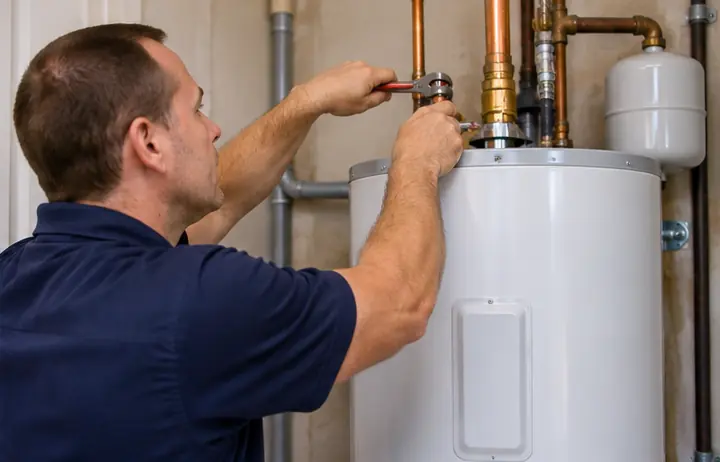 02
Installation for a new property, a renovated space, or a different equipment setup requires appropriate sizing, location planning, and checks of the available plumbing and utilities.
Learn About This Service →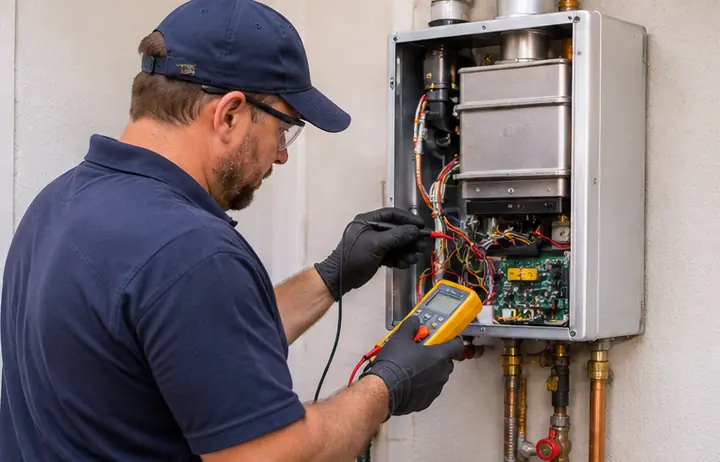 03
On-demand water heater problems may involve flow sensors, mineral buildup, error codes, ignition, controls, or other model-specific faults that need careful diagnosis.
Learn About This Service →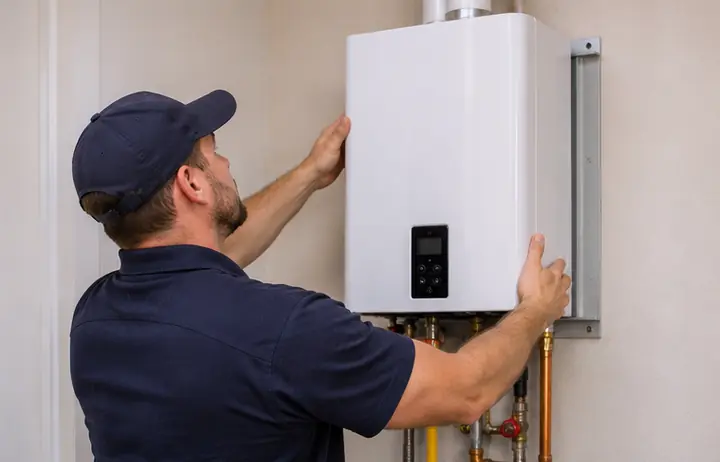 04
Tankless equipment selection depends on the hot-water flow needed at the property, required temperature rise, and whether existing gas, electrical, and venting systems are suitable.
Learn About This Service →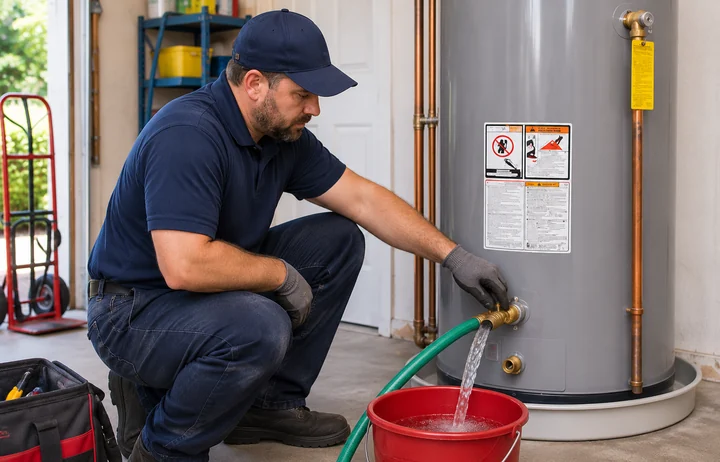 05
Routine care can include checking connections and tank condition, reviewing sediment concerns, and performing flushing or tankless descaling when appropriate for the equipment.
Learn About This Service →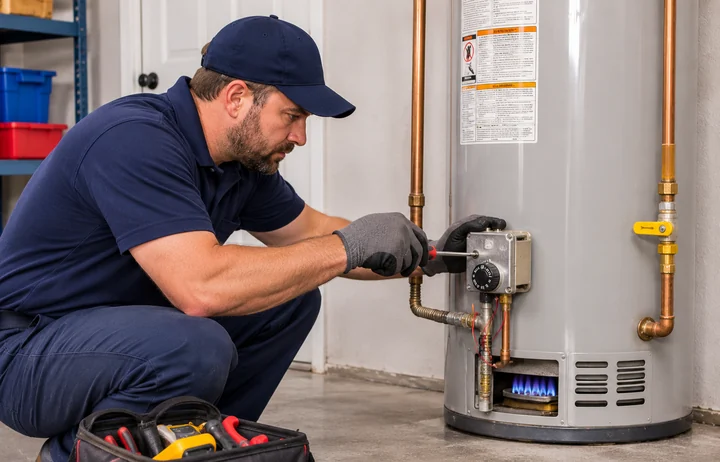 06
For gas-fired equipment, a professional can evaluate symptoms involving poor heating, ignition controls, burners, and safe venting before recommending appropriate work.
Learn About This Service →Call to describe your electric water heater problem and discuss service availability with our team.